Deep ʿAqīdah: One-Year Advanced Study
Lead with clarity. Defend with confidence.
Lead with clarity. Defend with confidence.
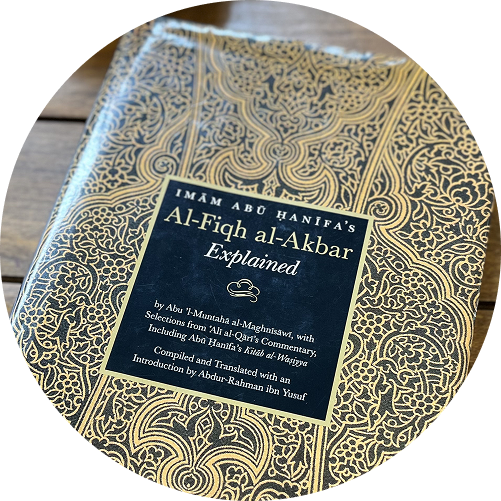
Study two commentaries on Abu Hanifa’s Fiqh al Akbar


This combines the core elements of the learning materials.
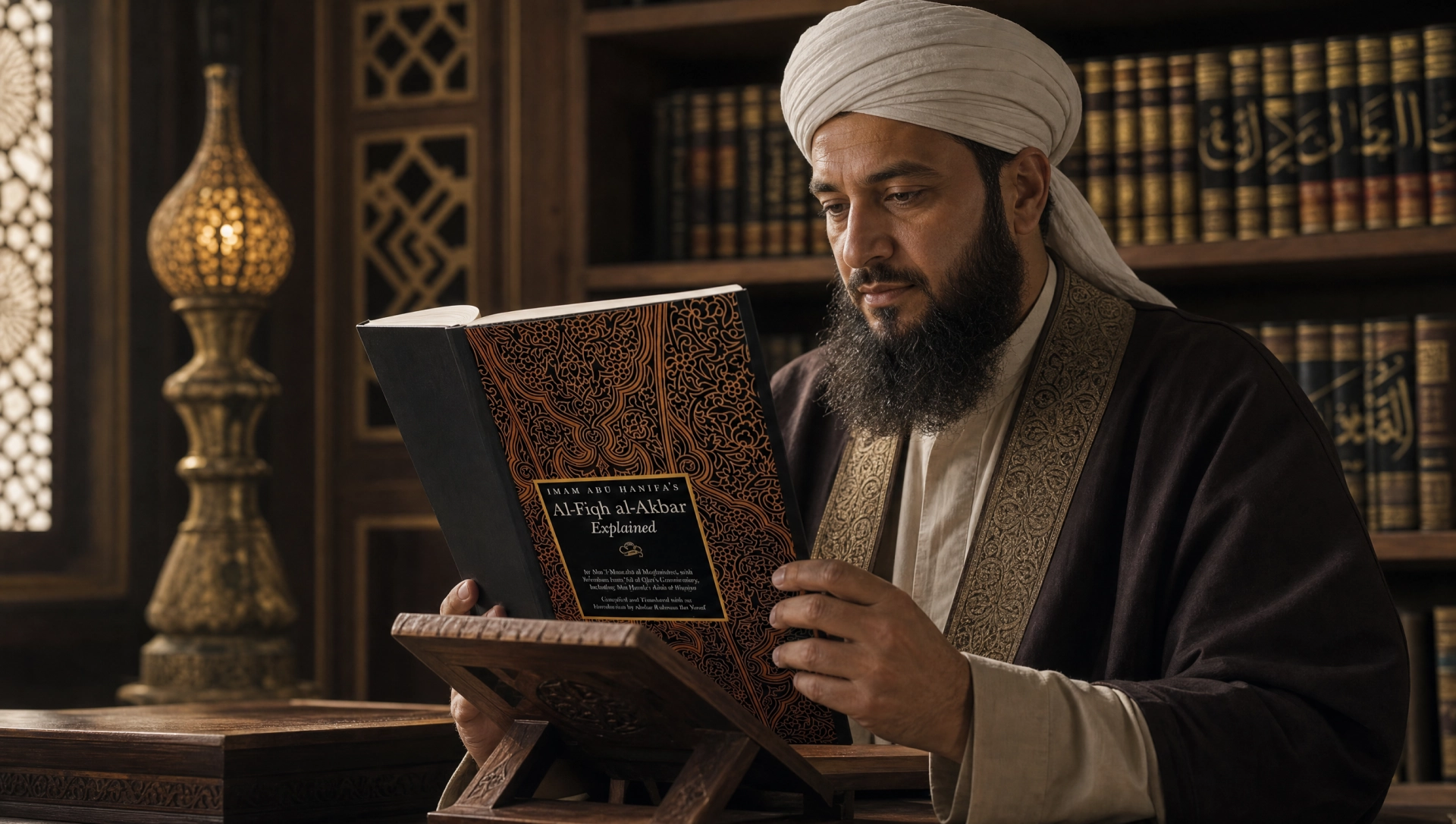
al-Fiqh al-Akbar (Abū Ḥanīfa) provides foundational literacy in classical kalām debates.

Proofs for God’s existence, theodicy (problem of evil), prophecy, and contemporary objections.
Imām Abū Muntahā al-Maghnisāwī. Expansive, Source-Rich: Mullā ʿAlıˉ al-Qārī.
This one-year advanced study guides you through the foundational principles of creed and equips you to answer contemporary doubts. Each module builds primary text literacy and mastery in classical kalām debates.
Sunni creed foundations; epistemology; tawḥīd methods (incl. dalīl al‑tamānuʿ); attributes vs essences.
Speech and Will; takwīn; omnipotence; pre‑eternal speech.
Remaining chapters of al‑Fiqh al‑Akbar; final eschatology and end‑times topics.
This course is built for serious learners who require answers to the tough questions and need arguments anchored in the classical canon, yet are persuasive today. The year is dedicated to forming the intellectual conscience—the ability to state a view, give its proof, anticipate the objection, and respond with integrity.
The mastery achieved in Deep ʿAqıˉdah is not just theoretical; it results in a defensible, teachable grasp of creed—with clear positions and clean reasoning. You will gain the confidence to lead with clarity and defend with confidence against contemporary doubts.
Our vision is to spark a revolution in the provision of Islamic education, developing upright individuals – well-informed of their faith – ready to deal with the challenges of their societies.
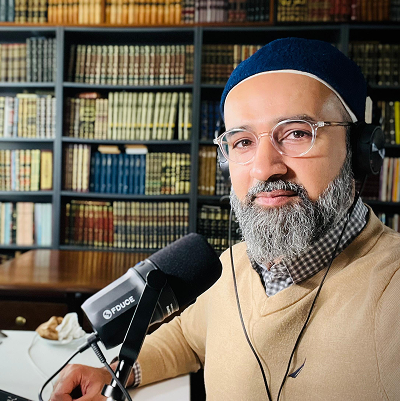
Having studied extensively in the Islamic sciences in the Muslim World, Shaykh Ruzwan has a passion for using innovative techniques to educate, and always wants to explore the ‘Why?’ Known for his dry sense of humour, his oft-repeated sentence is: ‘If you can’t explain it to a seven year old, you haven’t learnt it properly!”
If doubts are loud, answers must be precise. Deep ʿAqīdah guides students through al‑Fiqh al‑Akbar with two classic commentaries—so they learn the doctrine, the argument, and the rebuttal, not just the headline. It’s a year built for serious learners who want depth without academic fog.

Whether you’re curious about course content, learning formats, or how to get started, we’re here to guide you every step of the way. Explore the answers below, and remember — seeking knowledge is part of the path.
The course focuses not only on the delivery of a full classical text, but also ties this in with a modern interfaces: Tutorials on proofs for God’s existence, moral criteria, salvation, theodicy (problem of evil), prophecy, and contemporary objections.
Arabic is not a prerequisite.
The core text and commentaries will be covered with introductory summary and contextualisation, then a word for word study of the text.
The course includes extra tutorials on proofs for God’s existence, moral criteria, salvation, theodicy (problem of evil), prophecy, and contemporary objections.
Yes.
It is suggested that the course requires a minimum of 2 times the class teaching time to prepare and revise content outside of class, meaning a total of 150min focused study altogether.
Class lessons are available each week on the student portal. Live tutorials and Seminars are conducted every three weeks, and can be watched back in missed.
The topic is by its nature abstract. However, the tutorials cover real issues that are debated and discussed online and in real life, such as the question of evil and the origins of Morality.
The course is taught by Sh Ruzwan Mohammed, a Sunni theologian who is trained in the Ashari, Maturidi and Athari schools of Creed.
Yes.