Deep Fiqh: One-Year Advanced Study (Ḥanafī)
Go Beyond “What” to “Why.”
Go Beyond “What” to “Why.”


This combines the core elements of the learning materials.
The course all major fiqh or worship chapters of the manual focussing on details often not studied elsewhere and covering extra topics not commonly studied such as ritual sacrifice.

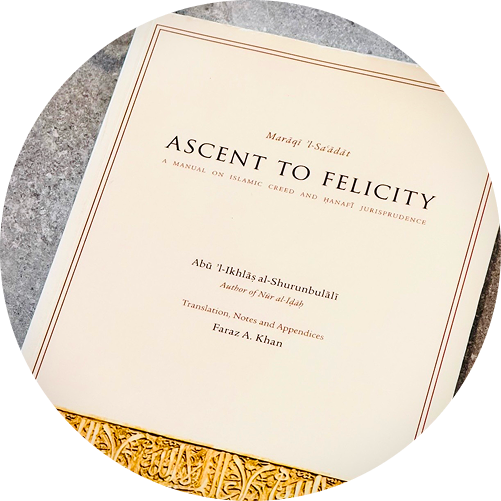
Abuˉ ’l‑Ikhlaˉṣ al‑Shurunbulaˉlıˉ’s Ascent to Felicity is the core text, known for being concise and comprehensive across the pillars.
The Manual is taught with a strong applied focus on everyday practice — covering wudu, ghusl, menstruation, the prayer, fasting, zakat, umrah and hajj.
This one-year advanced study guides you through the Ḥanafıˉ method, teaching you to move beyond “what” to “why.” Each module builds manual-level mastery of the rulings and their legal rationales.

Ṭahārah—wuḍū’, ghusl, wiping, menstruation & lochia, removing impurity.

Times, conditions, pillars, wājibāt, sunan; invalidators & makrūhāt; travel & infirm prayer; make‑ups; catching jamāʿah; sujūd al‑sahw/tilāwah; Jumuʿah, ʿĪd, kusūf, istisqā’, khawf; funerals; uḍḥiyah.

Ṣawm & Zakāh—definitions, invalidators, exemptions; zakāh conditions and recipients.

This course is built for serious learners who need reliable rulings with their rationales—and materials they can confidently teach from.
The mastery achieved here is not just theoretical; it equips you with a teaching-ready grasp of the Ḥanafıˉ method, providing genuine, manual-level command over day-to-day rulings.
No testimonials found.
Fiqh isn’t a checklist; it’s a method. Deep Fiqh takes learners through Ascent to Felicity (Marāqī al‑Falāḥ) — so rulings make sense, not just sense‑memes. From ṭahārah to ḥajj, with historical framing of the Ḥanafī school.
Our vision is to spark a revolution in the provision of Islamic education, developing upright individuals – well-informed of their faith – ready to deal with the challenges of their societies.
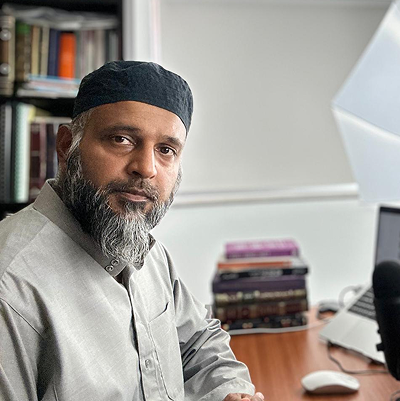
Shaykh Amer’s specialisation lies in Islamic Family Law. Being a certified NLP practitioner and also holding a certificate in counselling skills he has combined his religious and secular knowledge to help contextualise marital issues for the Western Muslim living in the 21st century.

Whether you’re curious about course content, learning formats, or how to get started, we’re here to guide you every step of the way. Explore the answers below, and remember — seeking knowledge is part of the path.
As the word suggests, this is a “deep” dive into fiqh rulings. Where some hanafi fiqh sources can be either too basic or too advanced, we believe deep fiqh provides the right balance, of covering fiqh comprehensively but at the same time avoiding but unnecessary or irrelevant fiqh discussions, which provide no real benefit for students living in the modern world.
We cover the text; Ascent to Felicity (Maraqi 'l-Sa'adat) which is a concise, authoritative primer on Hanafi jurisprudence (Fiqh) written by the 11th-century scholar Imam Hasan ibn 'Ammar al-Shurunbulali. It covers essential acts of worship (five pillars) and daily life rulings, designed as a clear, comprehensive guide. We read the text the way a traditional student of knowledge would study it in the Islamic world; the teacher explaining line by line. We also cover virtually all the accompanying footnotes, which provide further important details.
Where appropriate the teacher delves into the reasoning behind key rulings and how to apply those principles to other rulings as well.
The book is taught explaining the text line by line, ensuring each ruling is explained and understood. Students can review the learning via the recordings and ask questions on the student forum for further explanation to clarify further. The Shaykh will also mention where appropriate the rulings from the other schools, and when and how they would be applicable.
Students will have access to the Shaykh via the student forum throughout the course. There will also be the opportunity to engage live with the teacher via live tutorials where questions can be asked in live time. Additionally, there may be some in-person meet ups with the teacher during the course.
Students have access for a full year.
This course is most suited for those who have some reading or understanding of fiqh, but wish to formulate a solid grounding in the science. Upon successful completion of the course, a student should be able to answer the vast majority of questions which may arise on a daily basis from an average person.
This all depends on the student. Some prefer to do one course per year, others have done both courses simultaneously.